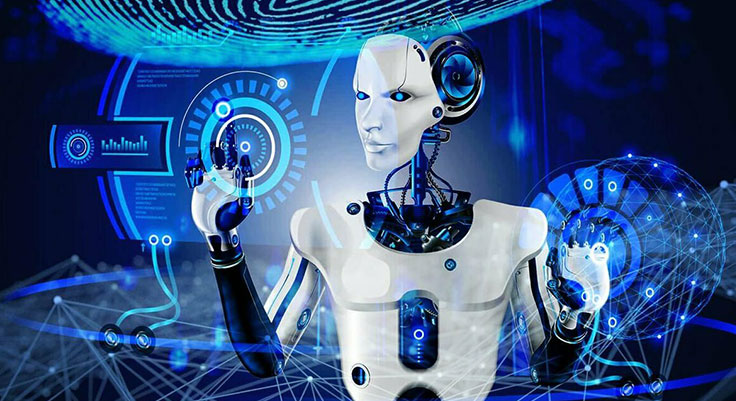
Robotics is an interdisciplinary branch of science and engineering dedicated to the design, construction, operation, and use of mechanical robots. Robotics is developing day by day, making industries automate their operations and letting their work be done by various robot parts which do work with more precision than humans. Robotics develops machines that replace humans and render human actions. The use of robotics has increased productivity and has the potential to bring more manufacturing production work.
Robots are mechanical devices programmed to perform specific functions and tasks which people might find boring, dirty, or dangerous to do on a daily basis.
There are many repetitive and common tasks in the manufacturing industry like welding, assembly, packing, etc. The robots are trained to perform these repetitive tasks with precision under the guidance and supervision of a human.
Logistics companies employ robots in warehouses to maximize time efficiency.Robots for delivery, handling, and quality control are becoming essential for most retailers and logistics companies.
Robots are specifically designed to reduce human efforts and can be seen helping with chores, reminding us of our schedules, and even entertaining our kids. They provide great ease and comfort by completing the given task quickly and effortlessly.
These robots help in surveying the desired area and notify the owner immediately in case of any disturbance. It can also help you monitor people who live near your home.
Robots are designed to provide solutions to different needs and fulfill multiple purposes, and therefore require several specialized components to perform these tasks.
One of the main components of a robot, found in any computer-driven technology: is the central processing unit (CPU) or Control System. The CPU acts as the “brain” of the robot. The CPU is a robotic component that provides feedback on external stimuli. The control system is programmed to tell the robot how to use certain components, much like the human brain sends signals through the body to complete certain tasks.
Sensors act as eyes and ears allowing the robot to gather information about its surroundings. This information can be used to control robot behavior. Common sensors in robots are video cameras that act as eyes, photoresistors that respond to light, and microphones that act as ears. The robot control system interprets the signals from these sensors and adjusts its behavior accordingly.
Actuators act as muscles are small motors attached directly to the structure of the machine that is responsible for the movement of robots. Robot bodies consist of metal, plastic, and similar materials, and inside these bodies are these small motors called actuators. Simple robots consist of an arm, an actuator, and a tool for performing work, while complex robots may use actuators to kick treads, wheels, or even legs into motion.
Just like human beings consume food when they need energy, robots receive their power from electricity to function as well. However, power sources come in many forms. Stationary robots, those found in factories, are directly powered like any other device. Mobile robots typically have large batteries, while robotic probes and satellites typically have solar panels to harvest energy from the sun.
End-effectors are the components that allow robots to finish carrying out simple to complex tasks. These components vary according to the tasks the robot has been designed to carry out. Robots in factories often have interchangeable tools such as paint sprayers and drills, and surgical robots can be equipped with scalpels. Other types of robots can be built to grasp claws or hands for tasks such as delivery and packing.
We have seen different robot applications in various industries. Robots are used for everything these days due to their precision and programming to perform a variety of tasks that are dangerous, tedious, or repetitive for humans. Robots can perform all physically demanding tasks that humans would consider difficult or impossible, and are becoming even smarter with advances in artificial intelligence.
Explore and find the right solution for your robotics, electronics, and electrical needs.


